
Epigenetic Clock Foundation
Overview
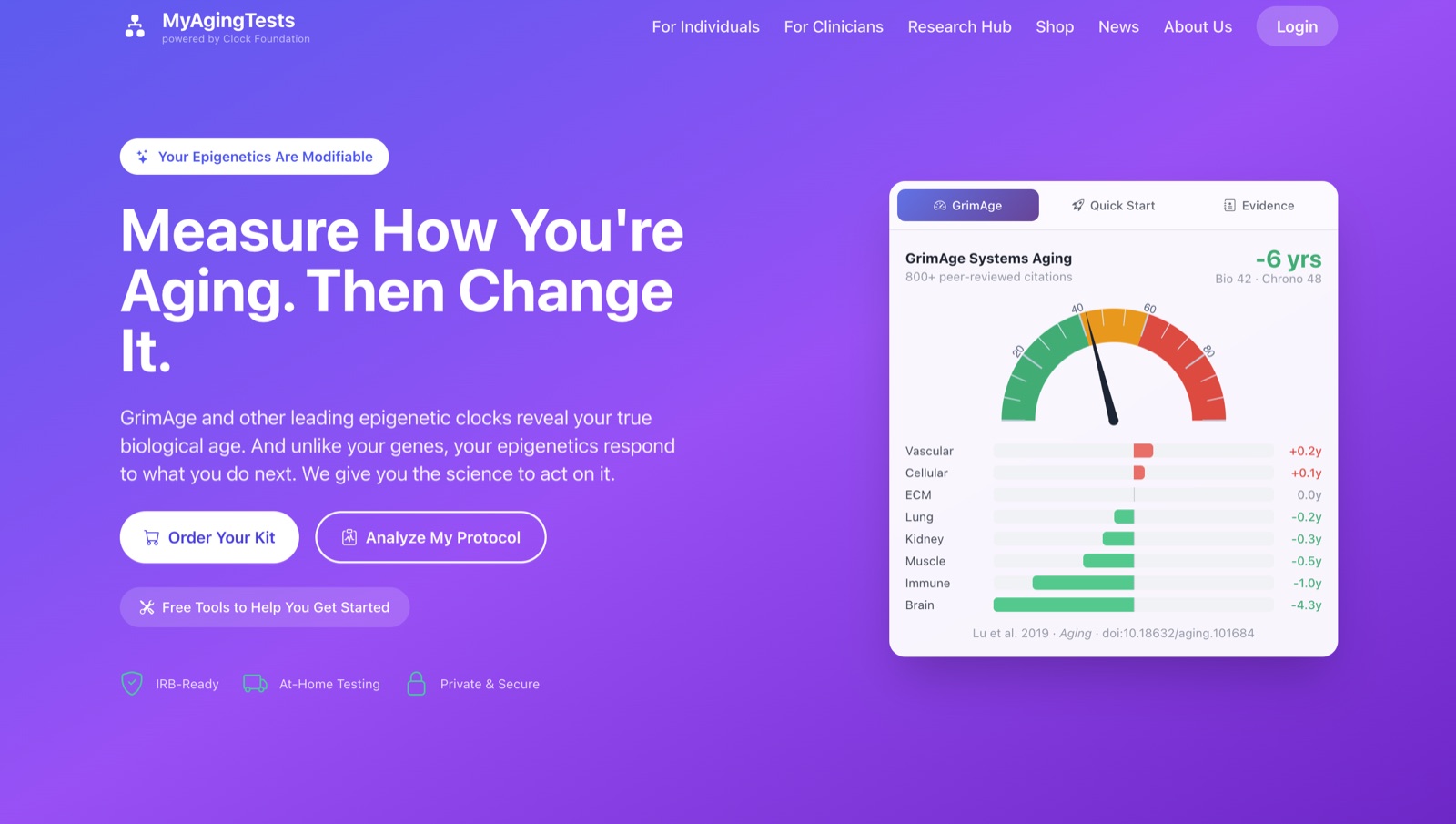
For five years I was Head of Product and Growth Lead at the Epigenetic Clock Foundation, a nonprofit behind some of the original epigenetic aging tests (GrimAge and related clocks). I helped take a research-only lab test and build a consumer side around it, sold through MyAgingTests.com, while also serving researchers and clinical trials.
The Challenge
Biological age testing started as a research tool. Turning it into something an ordinary person could order, understand, and act on meant building the whole path around the test: the ordering experience, the results and reports, the education, and a reason to come back and test again. It’s also a long, trust-driven purchase. People think about it for weeks or months before they buy.
The Health Report
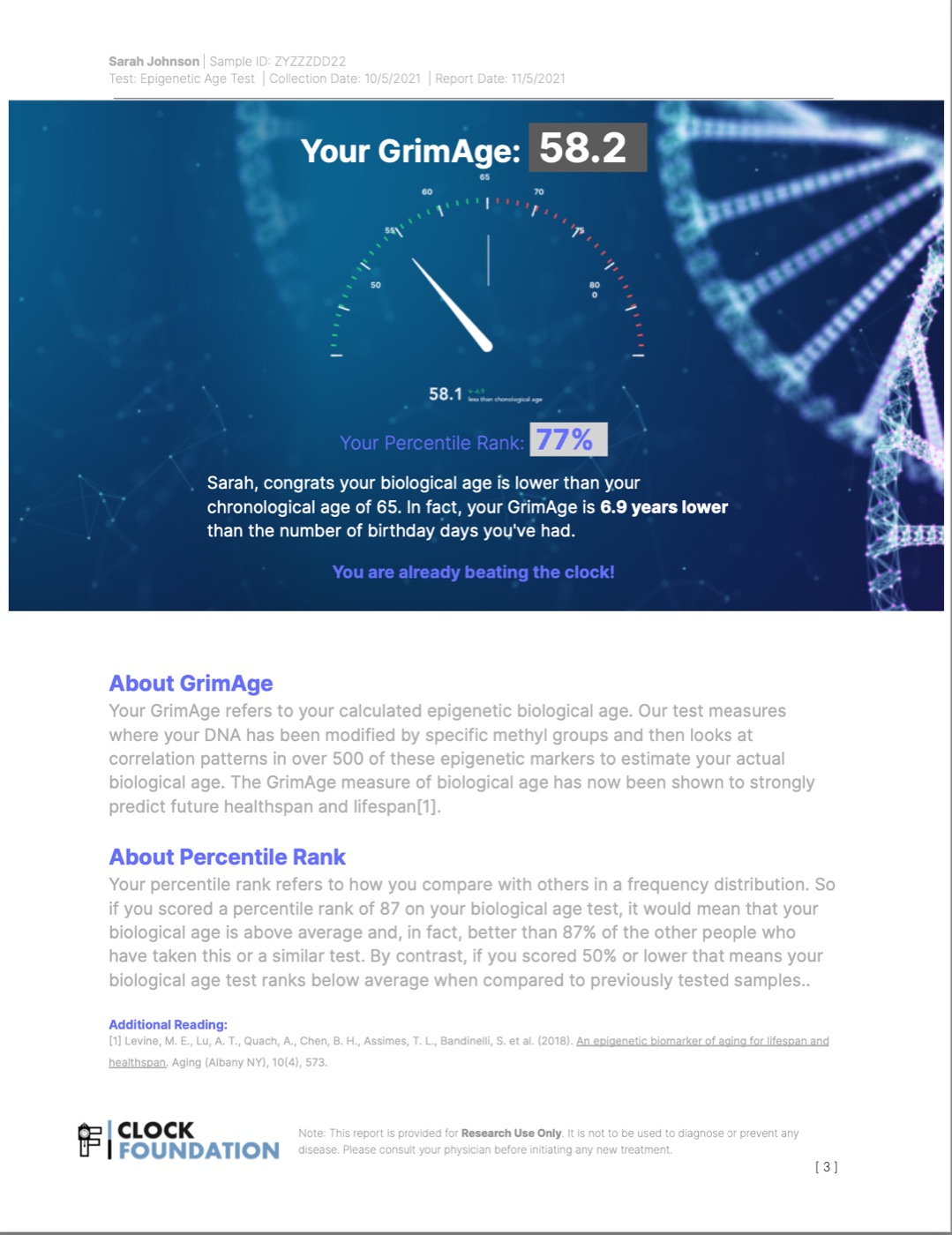
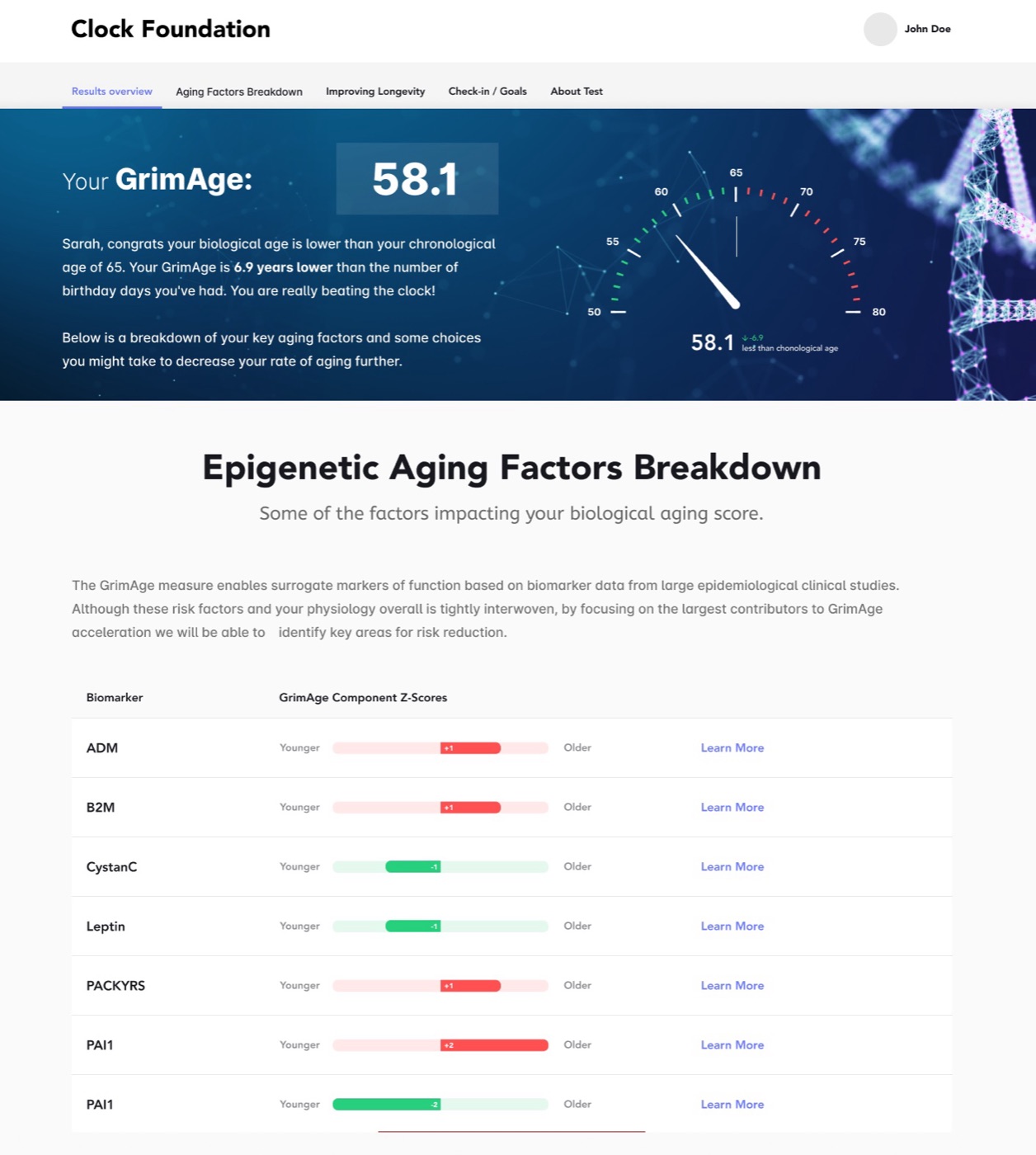
The report is where a lab result turns into something a person can understand and act on. I designed the GrimAge health report shortly after joining, in both PDF and web versions, and it has been in production ever since: a clear headline number, how it compares to your chronological age and to other people, a breakdown of the factors driving it, and plain-language context with the research behind it.
My Role
- Built the product: designed and built the consumer Longevity Tracker and patient portal, and ran it for 3+ years as tech lead, developer, and product designer. It served consumers, physicians, researchers, and partners from one platform.
- Clinical trial software: built the research-grade system of record for a clinical trial on reversing biological age.
- Led growth: acquisition, attribution, lifecycle and nurture, and the unit economics of a testing business. Grew consumer revenue about 7x in a year.
- Customer research: 70+ customer interviews, which shaped a segmented product and messaging strategy.
- Customer-facing consults: ran one-on-one consultations with people working through their own results, and designed a repeat-testing and coaching model that clients kept asking for.
- Team: built and led a small operations team.
Mapping the Journey
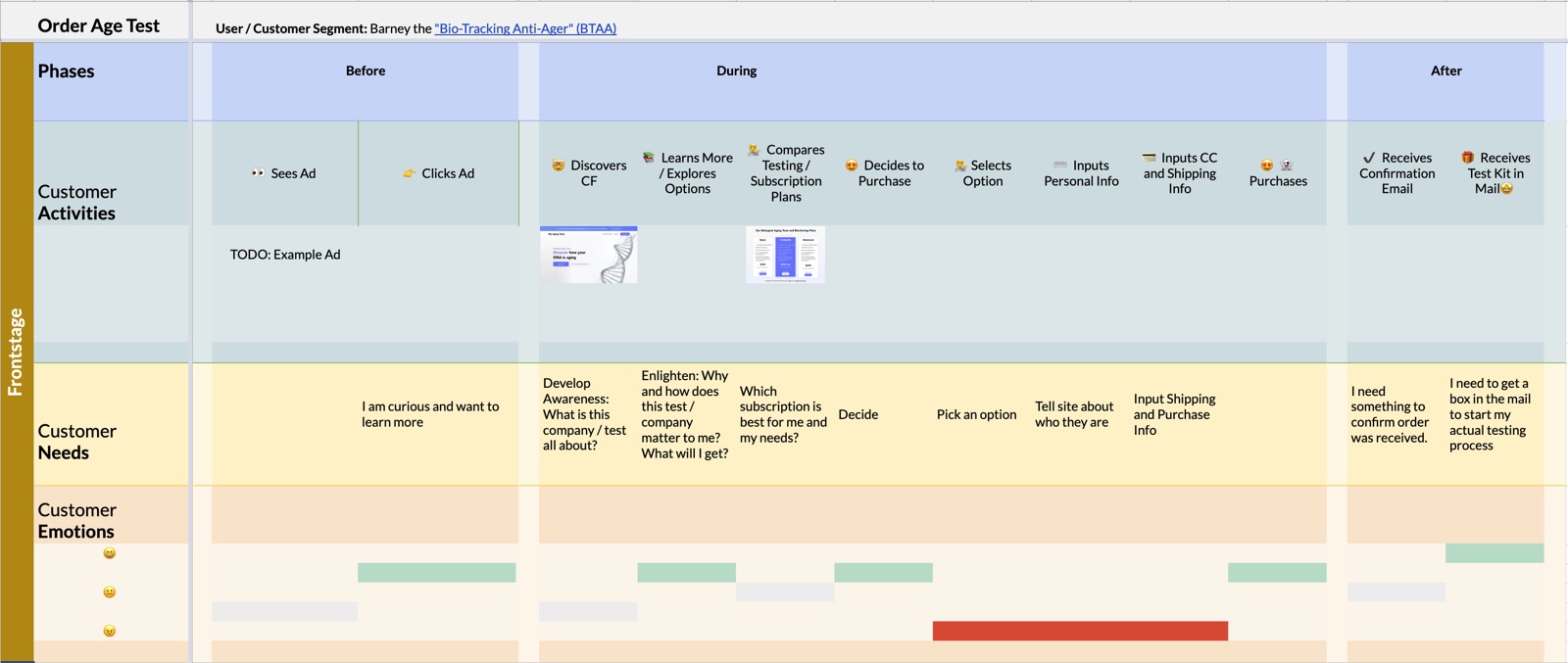
Early on I mapped the full buyer’s journey for our core customer segment, from first ad to the kit arriving in the mail: what people do, what they need at each step, and how they feel. It showed where people stalled (comparing options and checkout) and shaped both the site and the nurture flow.
What I Learned
- The number is the start, not the point. The real value is in what happens after the first test: interpretation, a plan, and a retest.
- Nurture beats paid ads for a long-cycle purchase. Leaning into education and trust raised conversion per visitor.
- People go deep when someone invites them in. The one-on-one consults showed how much people want help making sense of their data.
How I Worked
By the end, I ran growth as a solo operator with the output of a small team, using AI-native tooling I built myself: analytics through MCP, an automated ad pipeline, a code-based creative renderer, and a structured consulting workflow.
Tech Stack
- Product Strategy
- Growth Marketing
- Drupal CMS
- Python
- Data Analytics
- Google Cloud Platform (GCP)
- AI-Native Tooling